How Often Should Your Business Premises Be Professionally Cleaned?

Most business owners know their premises need regular cleaning, but the real challenge is working out how often professional cleaning should actually take place. The truth is, there is no one-size-fits-all answer. Cleaning frequency depends on how your space is used, how many people pass through it, and the standards required for your industry.
In this guide, we break down what influences cleaning schedules and help you understand what is appropriate for your workplace, whether you manage an office, school, warehouse, or multi-use commercial site.
Short Answer: How Often Should Your Business Premises Be Cleaned?
Most business premises should be professionally cleaned anywhere from daily to weekly, depending on usage. High-traffic environments like offices, schools, and healthcare settings usually require daily cleaning, while smaller or low-footfall spaces may only need weekly or scheduled visits. Deep cleaning is typically carried out periodically alongside routine cleaning to maintain hygiene standards.
What Determines How Often Your Business Needs Cleaning?
The right cleaning schedule is based on how your building operates day to day, not just its size. In practice, most commercial cleaning schedules are shaped by a few key factors.
Footfall And Daily Usage
The more people use your premises, the faster dirt, germs, and waste build up. A busy office with constant visitors will naturally need more frequent cleaning than a quiet administrative space.
High footfall areas such as receptions, meeting rooms, and shared kitchens often require daily attention.
Type Of Business Or Industry
Different sectors have very different hygiene expectations:
- Offices usually require routine daily or scheduled cleaning
- Schools and nurseries need frequent hygiene-led cleaning
- Healthcare and dental environments require stricter cleaning protocols
- Warehouses focus more on safety, dust control, and floor maintenance
Sector-specific cleaning standards are often more important than general schedules.
You can explore sector-specific approaches here.
Number Of Staff And Visitors
The more employees and visitors in a building, the higher the cleaning demand. Shared facilities like kitchens, toilets, and breakout areas are usually the first to show the impact of heavy use.
Building Layout And Facilities
Complex buildings with multiple floors, washrooms, and communal areas require more structured cleaning than simple open-plan spaces. More facilities generally means more frequent cleaning touchpoints.
Hygiene And Compliance Requirements
Some workplaces must meet stricter standards due to health, safety, or regulatory expectations. These environments typically require consistent professional cleaning schedules supported by documented procedures.
You can read more about compliance expectations here.
Typical Commercial Cleaning Schedules Explained
While every business is different, most cleaning programmes fall into a few common patterns.
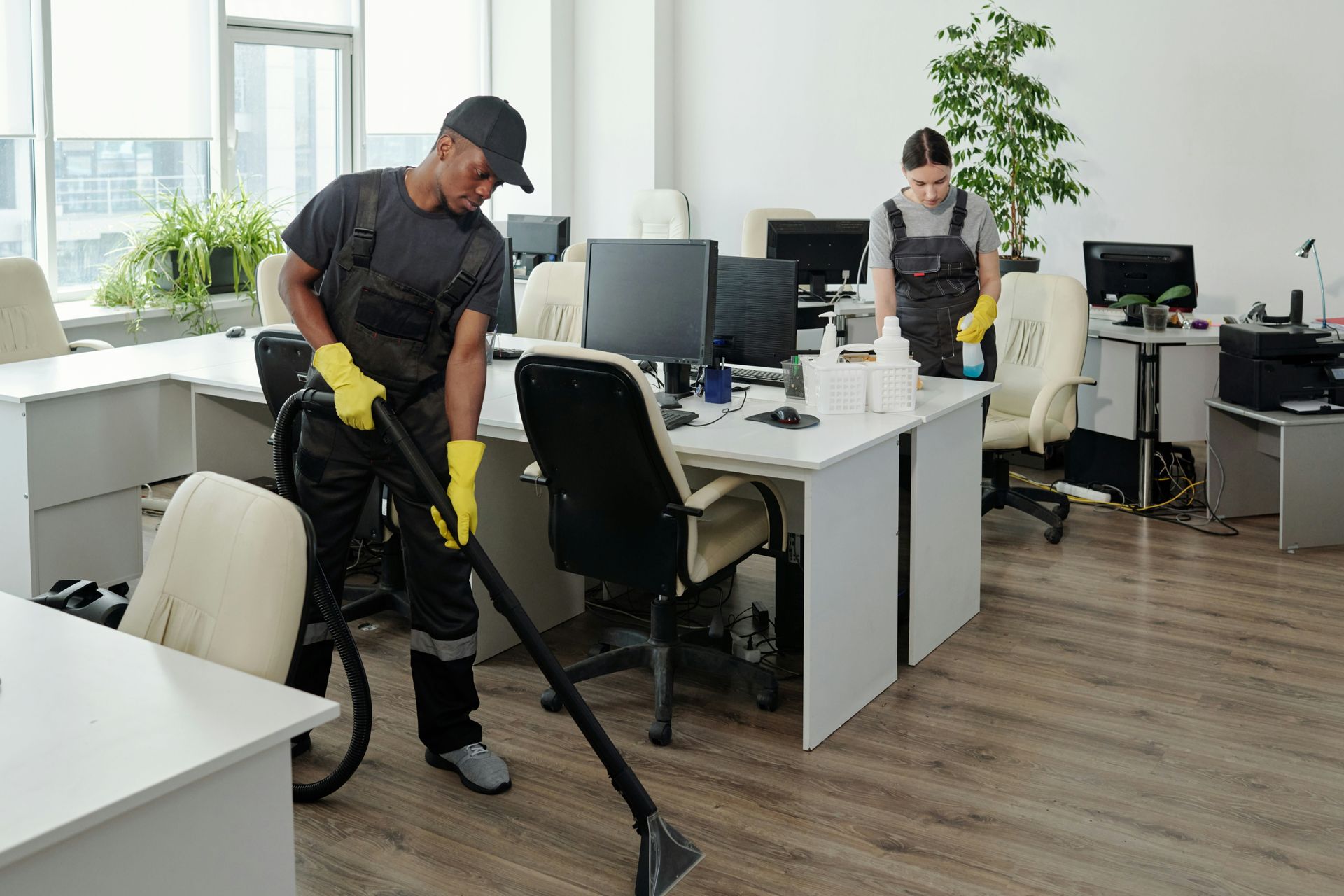
Daily Cleaning (Most Common For Busy Sites)
Daily commercial cleaning is ideal for:
- Offices with regular staff attendance
- Schools and nurseries
- Healthcare environments
- Busy shared commercial buildings
This usually includes washrooms, floors, kitchens, bins, and touchpoints.
2–3 Times Per Week Cleaning
This suits:
- Smaller offices
- Low-footfall workplaces
- Hybrid working environments
It helps maintain hygiene without unnecessary cost or disruption.
Weekly Cleaning
Weekly cleaning is typically suitable for:
- Very small office spaces
- Storage or low-usage commercial units
- Satellite offices or meeting rooms
However, even in these cases, shared areas may still need more frequent attention.
Periodic Deep Cleaning
Deep cleaning is not usually part of daily routines. Instead, it is scheduled alongside regular cleaning to target:
- Carpets and upholstery
- High-level areas
- Washroom deep cleans
- Floor restoration
- Post-event or seasonal cleans
Learn more about what’s included in professional cleaning here.
What Happens If Cleaning Is Not Frequent Enough?
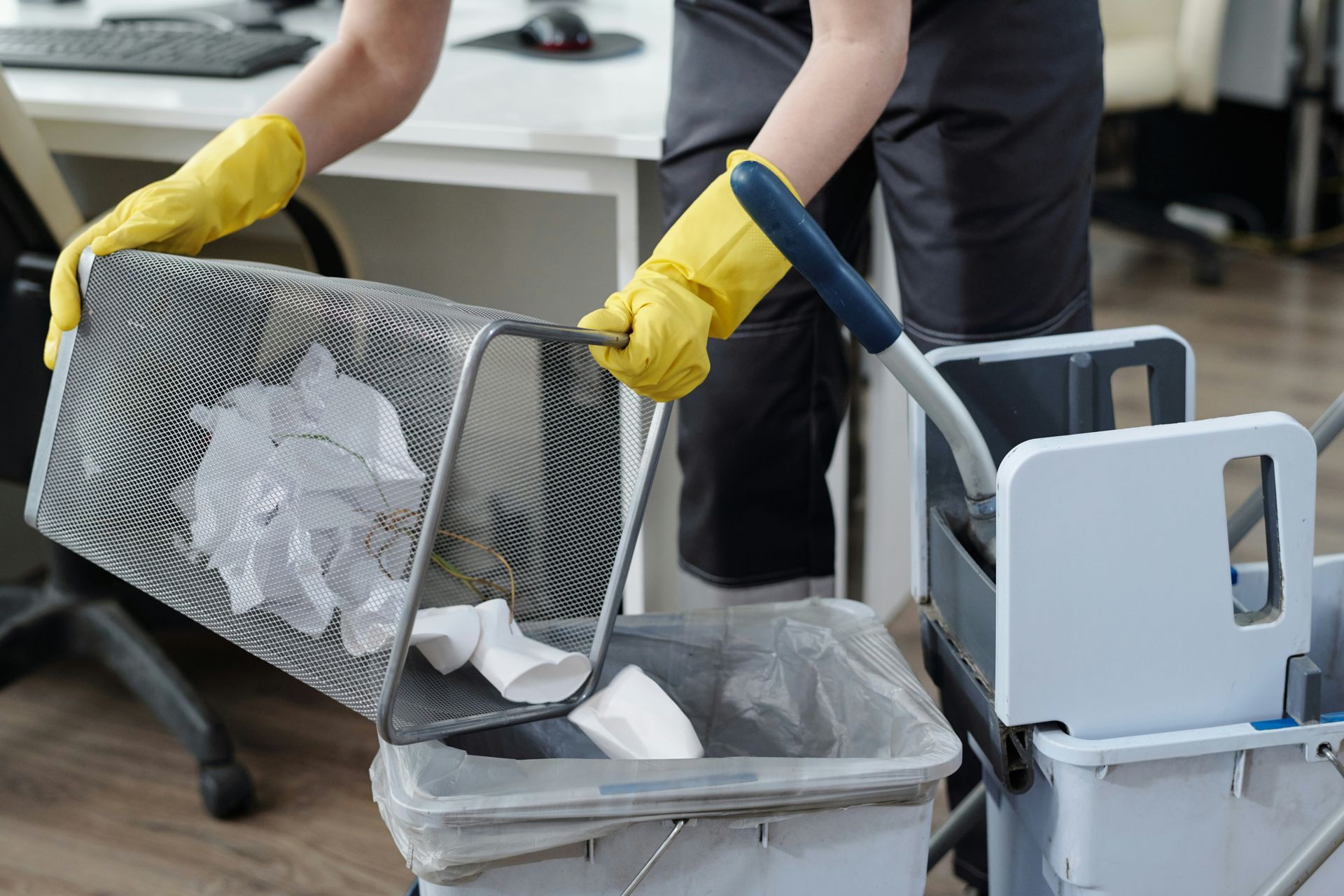
One of the most common issues we see in commercial environments is under-cleaning rather than over-cleaning.
When cleaning schedules are too light, businesses often experience:
- Faster build-up of dirt and waste
- Poor washroom hygiene standards
- Increased complaints from staff
- Higher maintenance costs over time
- Reduced workplace morale
Over time, small hygiene issues can become larger operational problems that are more expensive to fix.
Balancing Cost And Cleaning Frequency
It is natural for businesses to look at cleaning as a cost decision, but frequency often has a direct impact on overall value.
A lower-frequency schedule may save money short-term, but can lead to:
- More intensive deep cleaning later
- Increased maintenance work
- Higher staff dissatisfaction
In many cases, a consistent cleaning schedule reduces long-term disruption and keeps standards stable.
You can view typical pricing guidance
here.
Real-World Insight From Commercial Environments
From working with businesses across Croydon and wider London, one consistent pattern is clear: cleaning needs change over time.
For example, offices often require increased cleaning frequency when:
- Teams return to the office more regularly
- Headcount increases
- Hybrid working patterns shift
- Client visits become more frequent
This is why flexible cleaning contracts are often more effective than fixed, rigid schedules.
You can learn more about our approach here.
When Should You Review Your Cleaning Schedule?
You should reassess your cleaning frequency if you notice:
- Increased staff complaints
- Declining washroom or kitchen standards
- Visible dust or waste build-up
- More frequent maintenance issues
- Changes in staffing or building usage
A cleaning schedule should always reflect how your business actually operates, not how it operated in the past.
FAQs
Is Daily Cleaning Always Necessary For Offices?
Not always. It depends on staff numbers, usage, and visitor traffic. Many offices benefit from daily cleaning, but smaller or hybrid workplaces may not need it.
How Often Should Washrooms Be Cleaned In A Business?
Washrooms in busy workplaces usually require daily or even multiple daily cleans depending on usage levels.
What Is The Difference Between Regular And Deep Cleaning?
Regular cleaning maintains day-to-day hygiene, while deep cleaning targets built-up dirt, hard-to-reach areas, and periodic intensive cleaning tasks.
Can Cleaning Frequency Be Changed Over Time?
Yes. Cleaning schedules should be flexible and adjusted based on how your business evolves.
Do All Industries Have The Same Cleaning Requirements?
No. Different sectors such as offices, schools, and healthcare environments all require different cleaning frequencies and standards.
Final Thoughts
There is no fixed answer to how often business premises should be professionally cleaned, but there is always a right answer for your specific environment. The key is understanding how your space is used, how many people move through it, and what level of cleanliness is expected.
A well-planned cleaning schedule not only maintains hygiene but also supports productivity, staff wellbeing, and the long-term condition of your workplace.
If you are unsure what frequency is right for your business, it is worth reviewing your current setup and comparing it against how your premises are actually used today.